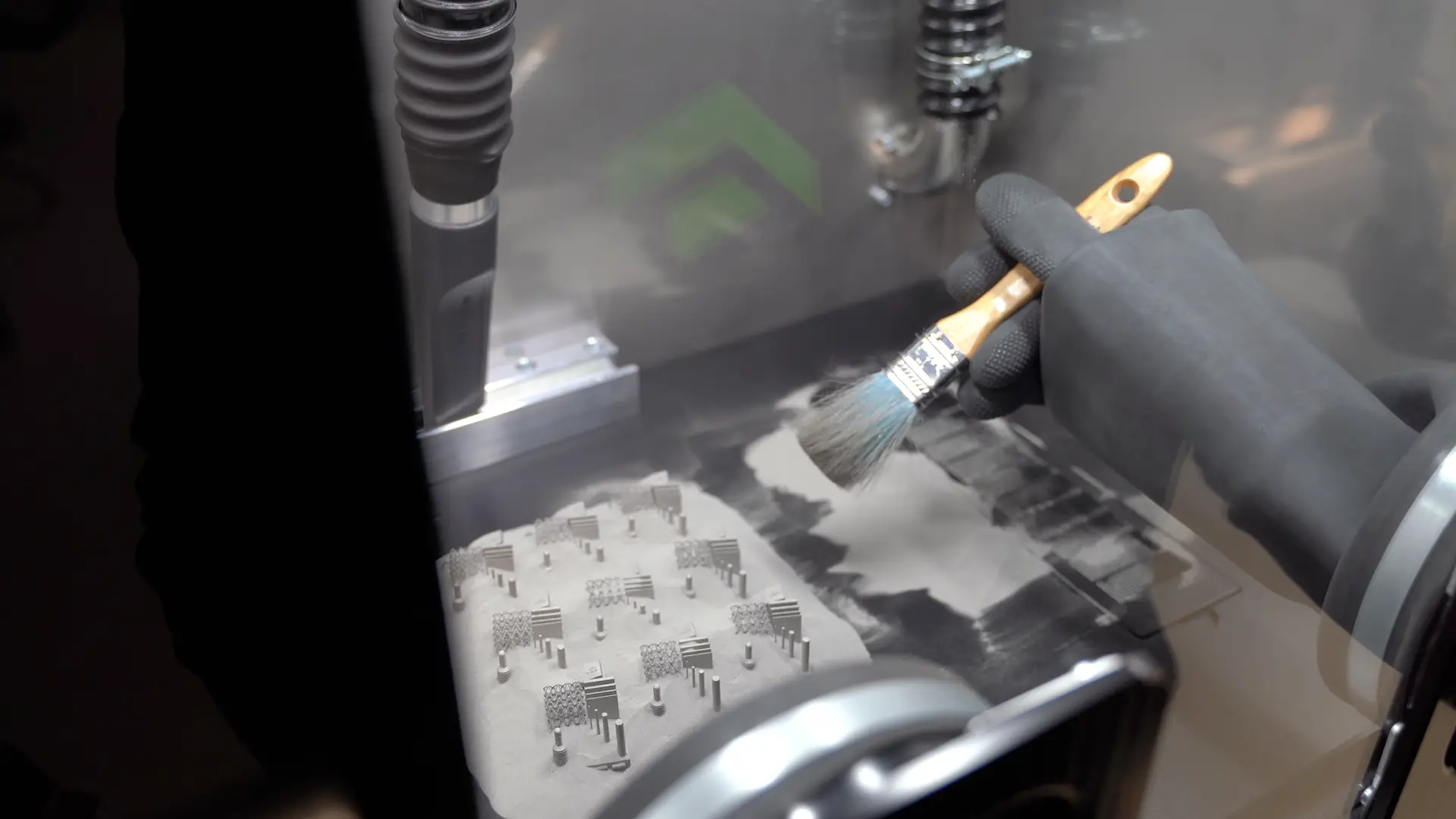
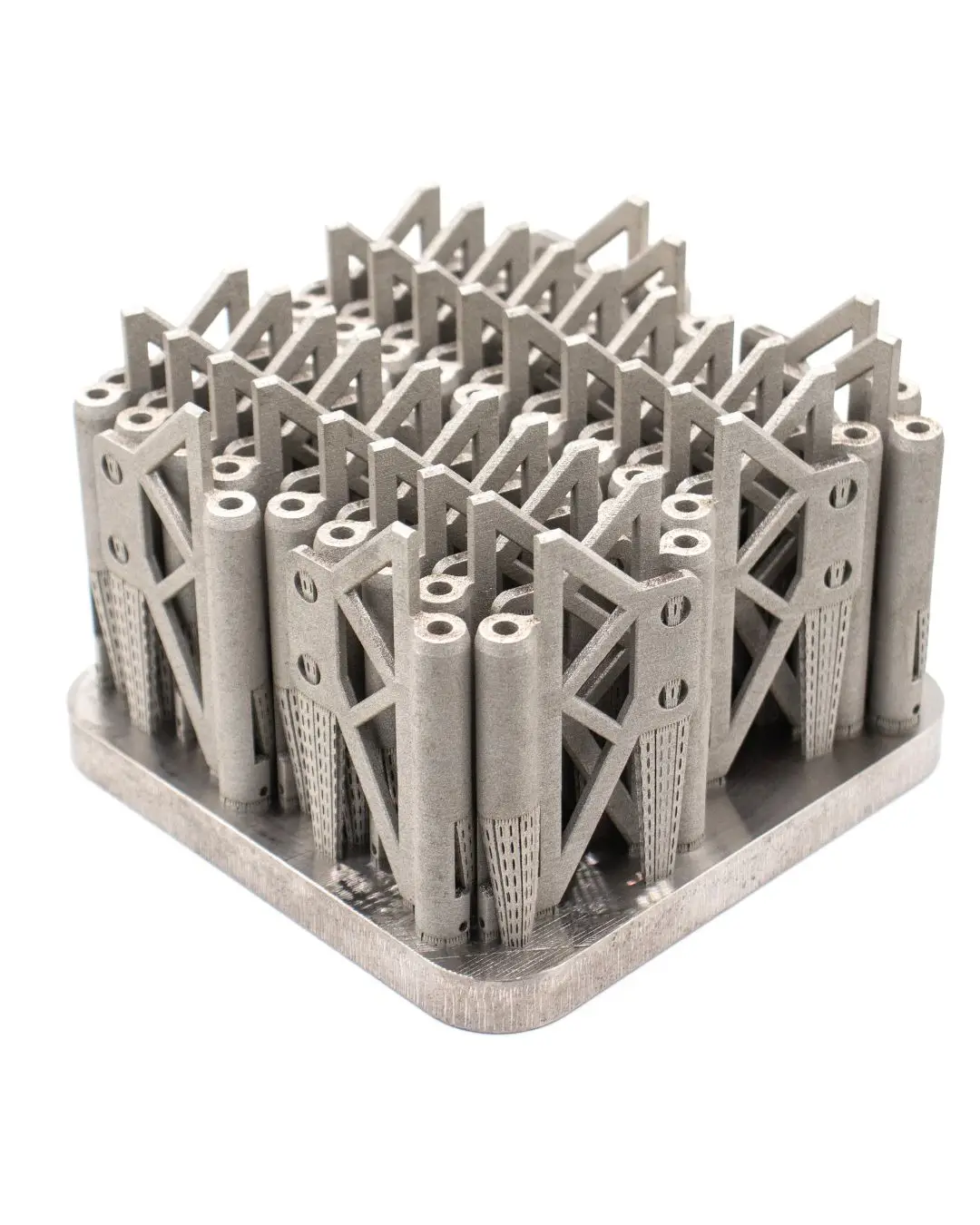
Titanium is one of the most widely used materials in metal additive manufacturing – and for good reason. Its unique combination of high strength, low weight, excellent corrosion resistance, and biocompatibility makes it ideal for demanding industrial and medical applications.
In metal 3D printing, Ti-6Al-4V Grade 23 has become a standard alloy for producing high-performance components with complex geometries. This article takes a closer look at why titanium performs so well in metal additive manufacturing and how it can be processed reliably using LPBF technology.
What Makes Titanium Ti-6Al-4V Grade 23 Special?
Ti-6Al-4V Grade 23 is a titanium alloy consisting primarily of titanium, aluminum, and vanadium. Compared to Grade 5, Grade 23 features reduced oxygen content, which improves ductility and corrosion resistance – making it especially suitable for safety-critical and medical applications.
Key material characteristics include:
- High strength and toughness
- Low density, resulting in an excellent strength-to-weight ratio
- Outstanding corrosion resistance
- Biocompatibility, enabling use in medical implants
Thanks to these properties, Ti-6Al-4V Grade 23 is widely used in aerospace, automotive, medical, and high-performance consumer products.
Typical Applications of 3D Printed Titanium
Metal 3D printing unlocks design freedom that traditional manufacturing methods cannot achieve – especially for titanium components.
Common application areas include:
- Aerospace and aviation components requiring lightweight strength
- Automotive parts optimized for performance and weight reduction
- Medical implants and surgical instruments
- Jewellery and design products with complex geometries
Additive manufacturing enables internal channels, lattice structures, and topology-optimized designs that fully leverage titanium’s material advantages.
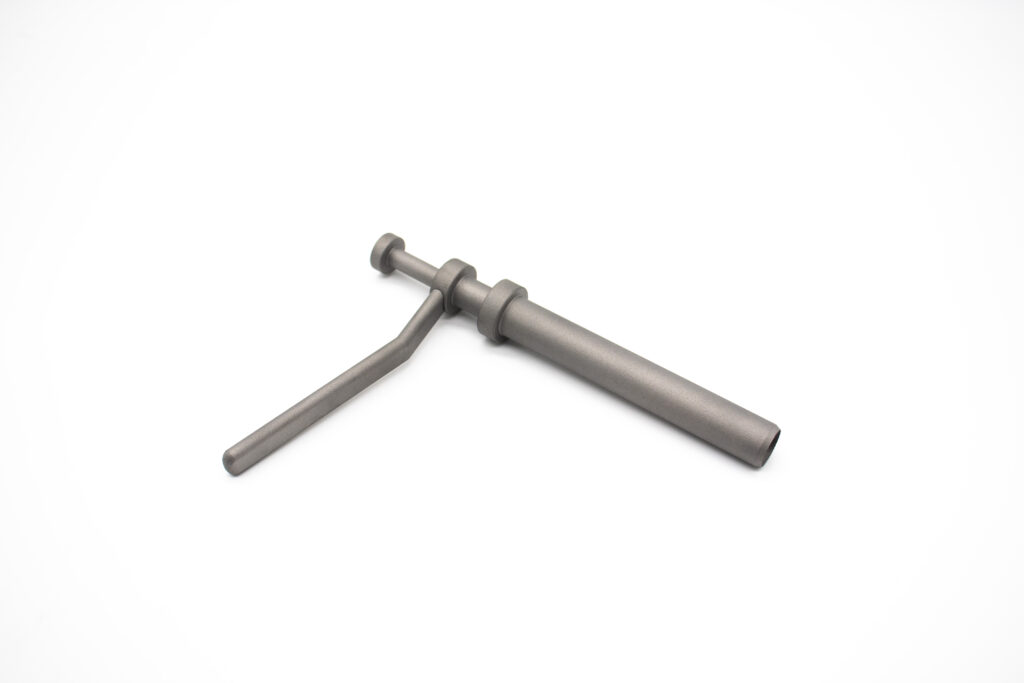
Titanium in LPBF: Optimized for Reliable Production
Ti-6Al-4V Grade 23 is particularly well suited for Laser Powder Bed Fusion (LPBF). The alloy maintains a stable microstructure across a wide temperature range, enabling consistent processing and repeatable part quality.
When processed on One Click Metal systems, the titanium powder is optimized for producing robust, high-density components with excellent mechanical properties.
Typical process parameters include:
- Layer thickness: 30 µm
- Inert gas environment: Argon
- Optimized powder chemistry for low defect rates
Mechanical Properties of LPBF Titanium Parts
In the as-built condition, Ti-6Al-4V Grade 23 already delivers strong mechanical performance:
- Yield strength (Rp0.2): ~784 MPa
- Tensile strength (Rm): ~1137 MPa
- Elongation at break: ~15.6%
As a heat-treatable alloy, titanium offers further potential for optimization. Depending on the heat treatment strategy, elongation at break can be increased to up to 22%, allowing manufacturers to tailor properties to specific application requirements.
Surface Quality and Part Integrity
Surface quality is an important consideration in metal 3D printing, particularly for functional and medical components.
For LPBF-printed titanium parts:
- As-built surface roughness (Ra): ~6.45 µm
- After blasting: ~3.45 µm
In addition, the average internal defect rate is below 0.1%, demonstrating the high process stability achievable with optimized titanium powders and controlled printing parameters.
Why Titanium and Metal 3D Printing Are a Perfect Match
Titanium fully benefits from the strengths of metal additive manufacturing:
- Complex, lightweight geometries improve performance
- Material is used only where needed, reducing waste
- High-value parts can be produced efficiently in small to medium batches
- Design iterations can be implemented quickly without tooling changes
For manufacturers seeking maximum performance per gram, titanium remains one of the most compelling materials available.
Conclusion: Titanium as a Cornerstone of Metal AM
Ti-6Al-4V Grade 23 combines material excellence with additive manufacturing flexibility. Whether for aerospace, medical, or high-performance industrial applications, titanium enables lightweight, durable, and highly optimized components that would be difficult or impossible to manufacture conventionally.
With optimized powders and proven LPBF process parameters, One Click Metal systems make titanium 3D printing reliable, accessible, and production-ready.