Customized clamping solutions for complex welding applications
In modern manufacturing, companies are increasingly facing the challenge of producing complex components under strict process requirements. This is exactly the case for Hoedtke Metal solutions, an innovation-driven production company with over 85 years of experience in metal processing.
In this application story, we show how metal 3D printing enabled Hoedtke to develop a customized fixture solution, significantly reducing lead times and simplifying production.
The challenge: Complex geometry meets strict process requirements
For a customer project, safety-critical pipe bends needed to be manufactured using orbital welding – the only approved production method.
However, there was a major issue:
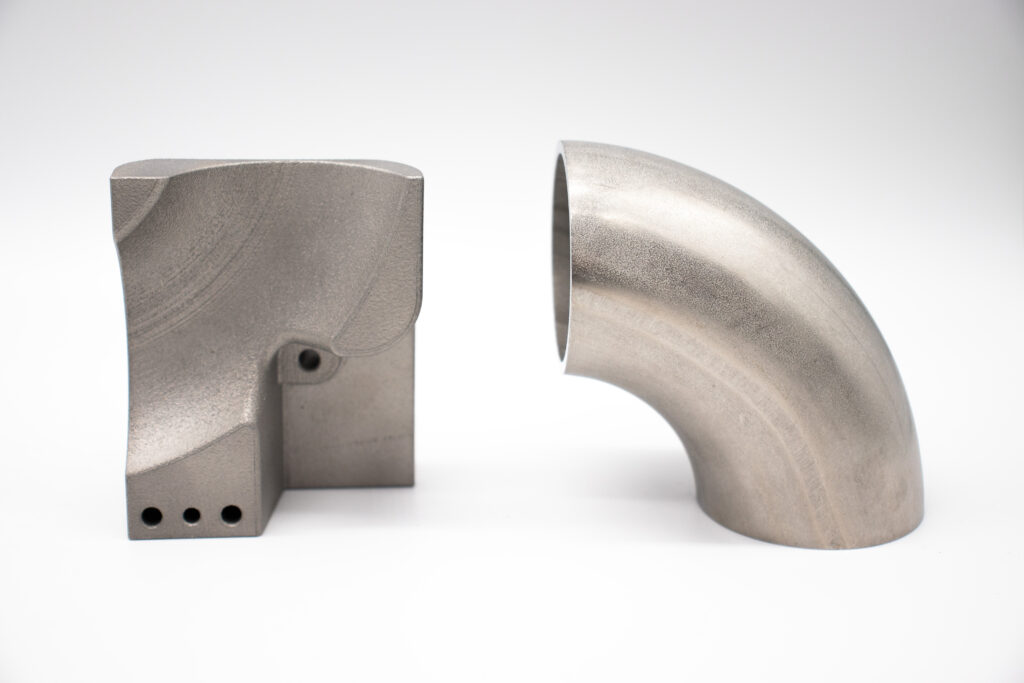
- The geometry of the pipe bends prevented proper clamping
- Standard fixtures could not securely hold the components
- The linear section of the pipe was only 20 mm long
As a result, the components could not be processed using conventional clamping systems, even though the manufacturing process itself was fixed.
👉 This created a classic manufacturing conflict:
Approved process vs. unsuitable component geometry
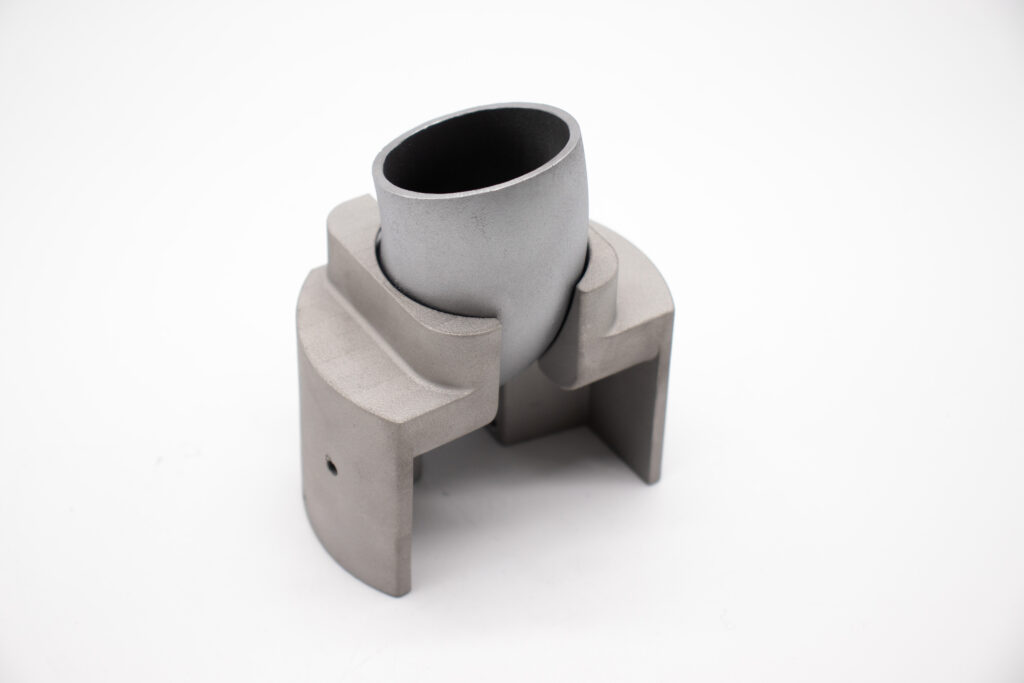
The solution: Additive manufacturing of customized clamping jaws
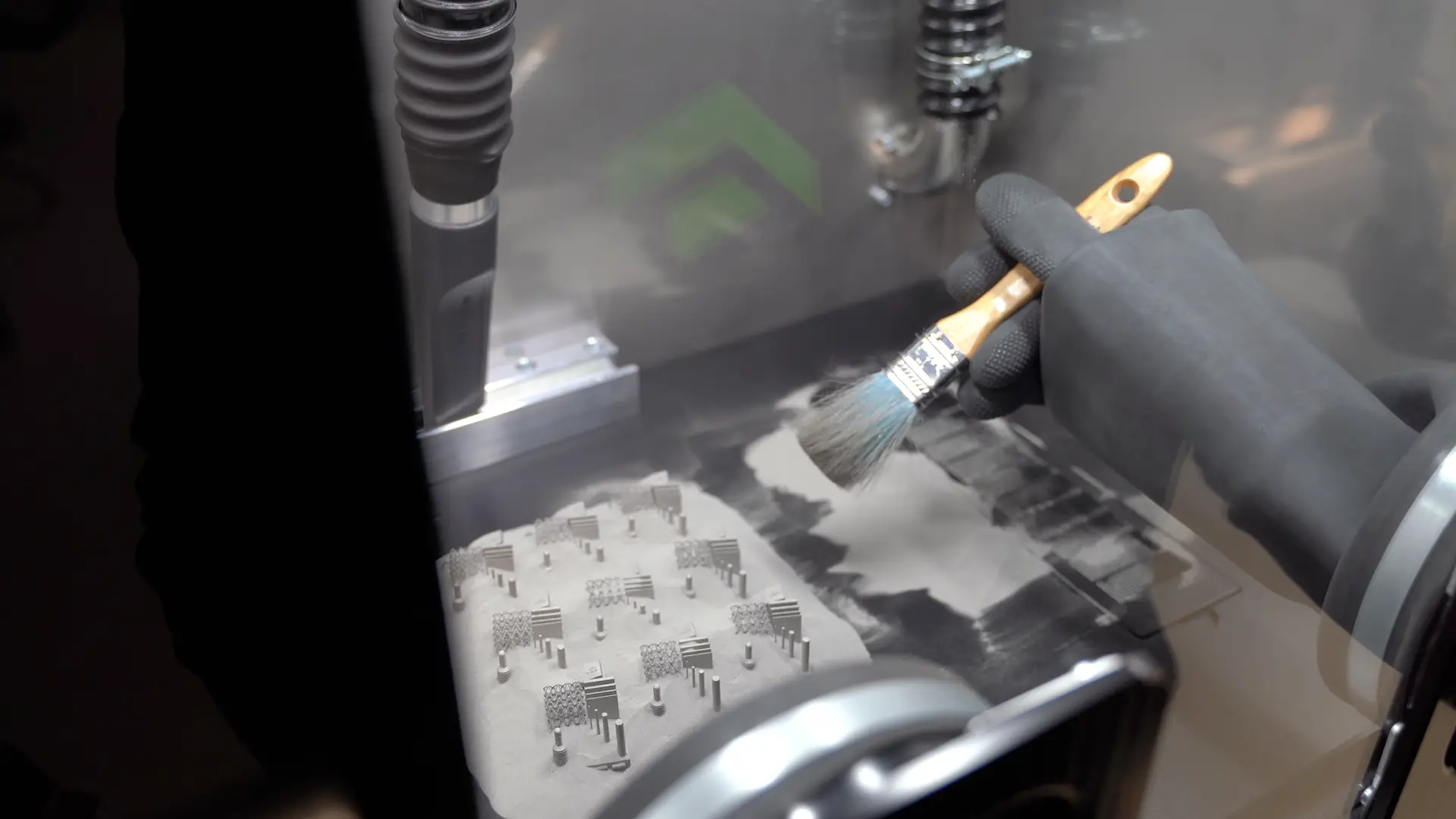
To overcome this challenge, Hoedtke turned to metal additive manufacturing (LPBF).
The solution:
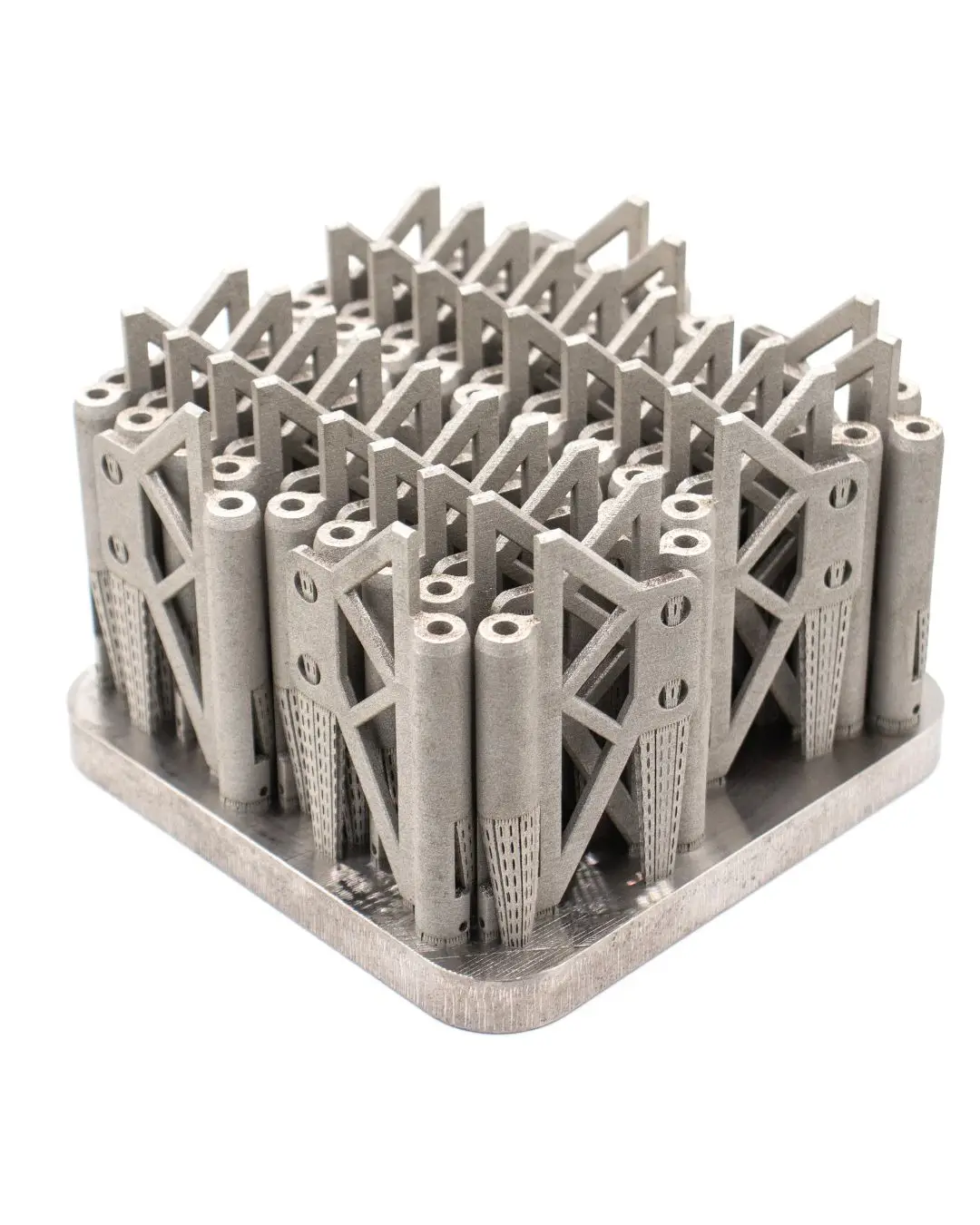
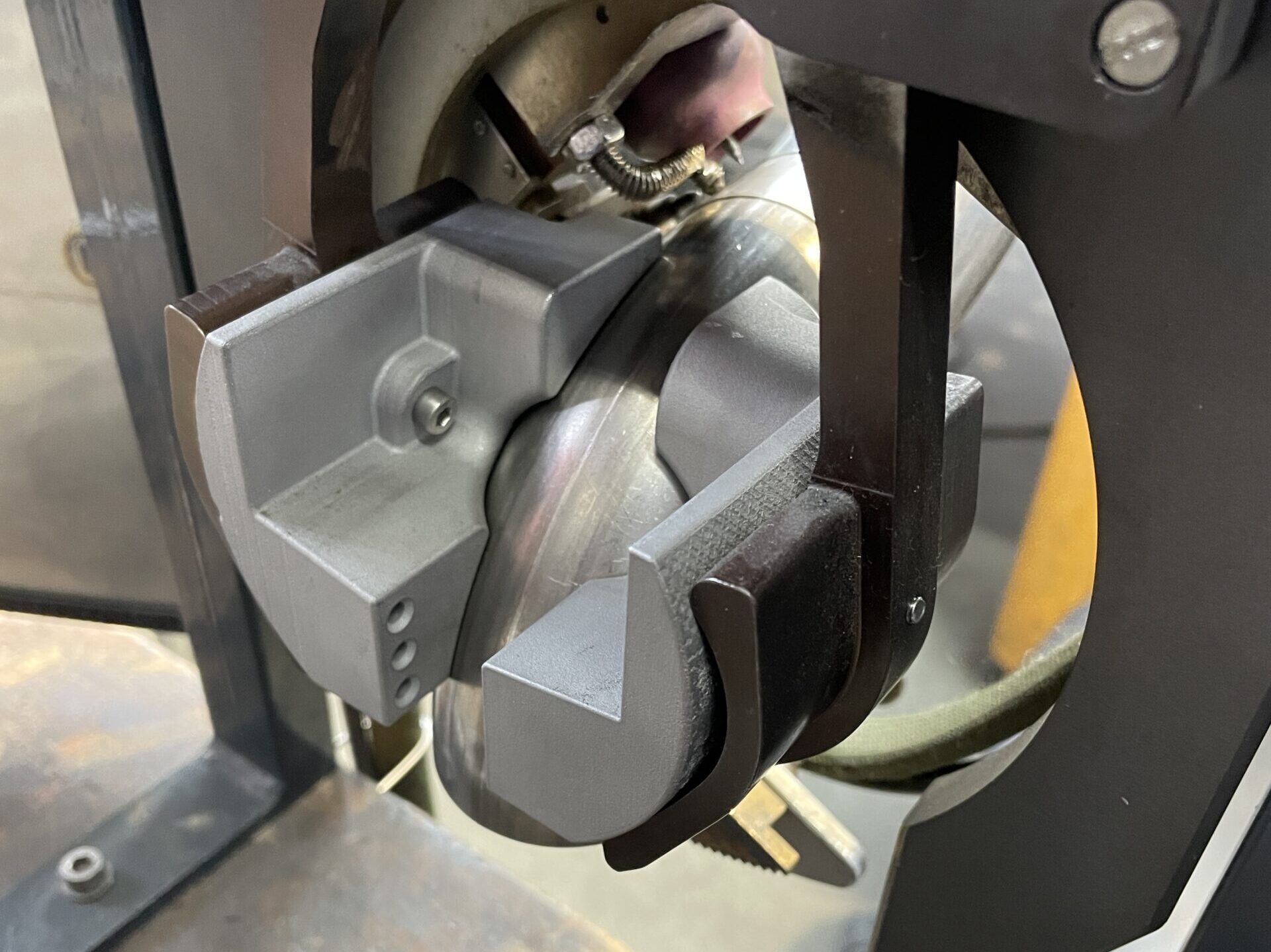
- Development of customized clamping jaws
- Geometry adapted precisely to the pipe bends
- Functioning as an interface to existing welding fixtures
By using metal 3D printing, Hoedtke was able to:
- Produce highly individualized components
- Skip traditional, time-consuming process chains
- Start production directly after design
The parts were manufactured in stainless steel 316L (1.4404) using a 200W fiber laser system.
Results: Faster production and reduced complexity
The impact of additive manufacturing was significant:
- 64% reduction in lead time
- Faster design-to-production workflow
- Reduced dependency on machine availability and material stock
- Minimal post-processing due to optimized design
Within just a few days, the entire process – from design to functional use – was completed.
Why metal 3D printing made the difference
The key advantage of metal 3D printing in this application lies in its design freedom and process simplification.
1. Geometry no longer limits manufacturing
Complex shapes that cannot be produced conventionally can be realized easily with additive manufacturing.
2. Shortened process chain
By eliminating multiple production steps and waiting times, the overall process becomes faster and more efficient.
3. Reduced workload
Less manual intervention, fewer iterations, and faster setup lead to significant resource savings.
4. Scalable for future production
Once designed, the clamping jaws can be reproduced quickly for future orders.
About Hoedtke Metal solutions
Hoedtke is a German manufacturing company specializing in metal and sheet metal processing, laser technology, and additive manufacturing. With over 250 employees and decades of experience, the company supports customers across industries such as automotive, aerospace, and medical technology.
Conclusion: Additive manufacturing as a problem solver in production
This case clearly demonstrates how metal 3D printing enables practical solutions for real manufacturing challenges.
By combining design flexibility with faster production, companies can:
- Overcome geometric limitations
- Reduce lead times
- Increase efficiency in fixture construction
👉 Metal 3D printing is not just a prototyping tool – it is a powerful enabler for production-ready solutions.