Many companies get their first metal 3D printed part right. The prototype fits, the material performs, and the case for additive manufacturing looks solid. The harder question comes next: how do you move from a single successful print to a repeatable, cost-efficient production process?
Scaling metal additive manufacturing (AM) is not simply a matter of printing more parts. It requires a structured approach to design, process planning, and quality control. This article walks through what changes between prototyping and serial production, and shows how one manufacturer used metal AM to redesign an assembly for series use with measurable results in cost, storage, and assembly effort.
Why Scaling Metal AM Is Different from Prototyping
A single prototype tolerates variation. A production batch does not. Moving to series introduces requirements that rarely matter for a one-off part:
- Repeatability: every part in a batch must meet the same tolerances and mechanical properties, print after print.
- Cost per part: material usage, laser exposure time, and post-processing steps all need to be optimized once volume increases.
- Nesting and batch planning: build volume has to be used efficiently to print multiple parts per job.
- Powder quality control: consistent, well-sieved powder becomes critical when the same feedstock is reused across many builds.
None of these issues are visible at prototype stage, which is why companies that plan for serial production only after printing a working prototype often have to redesign the part a second time.
The Three Steps from Prototype to Series
1. Start: Define the Status Quo
Before redesigning anything, the current manufacturing process is analyzed for its actual weak points. This typically includes reject rates, the number of suppliers and storage locations involved, and how many assembly steps the part requires today.
2. Design for Additive Manufacturing (DfAM)
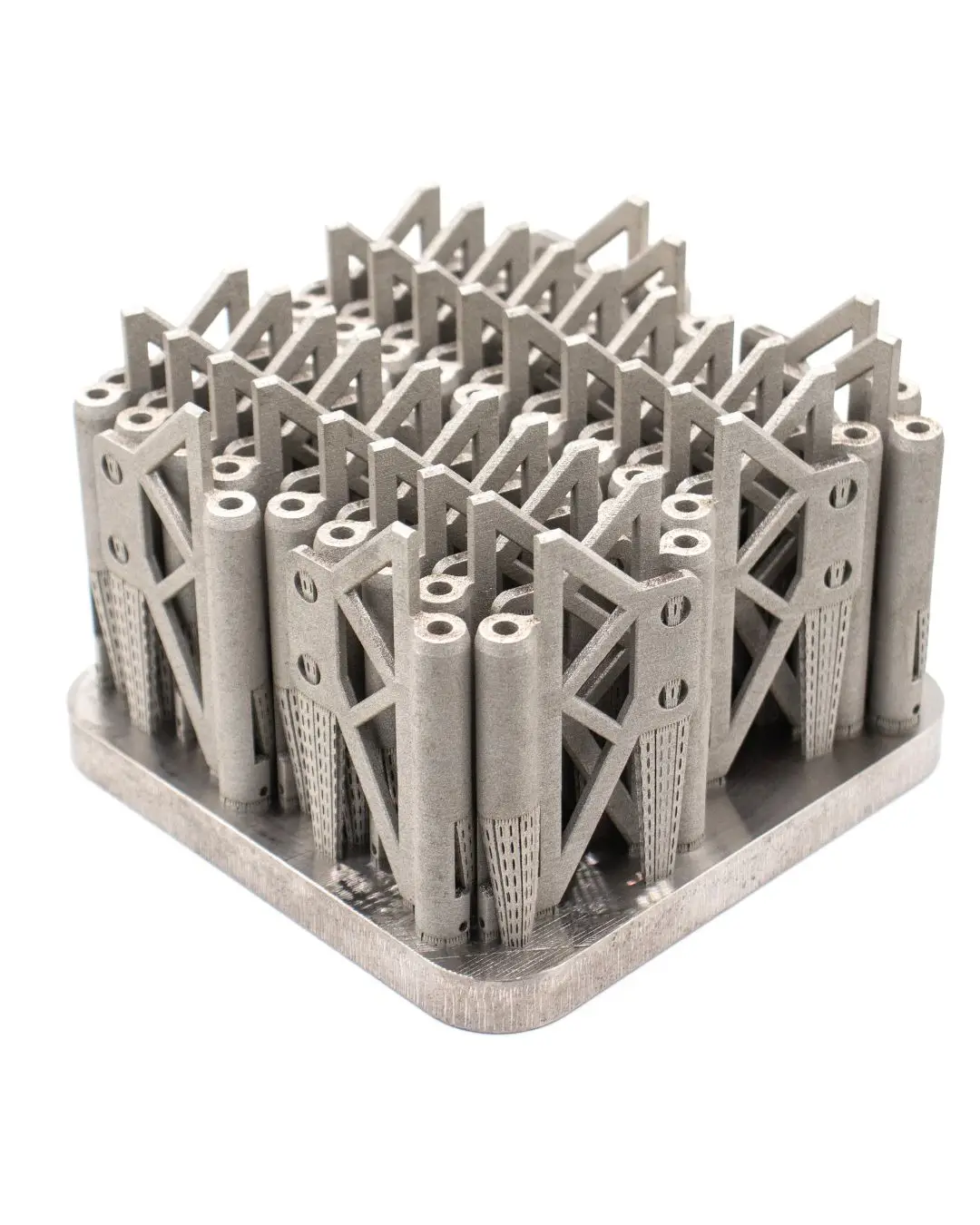
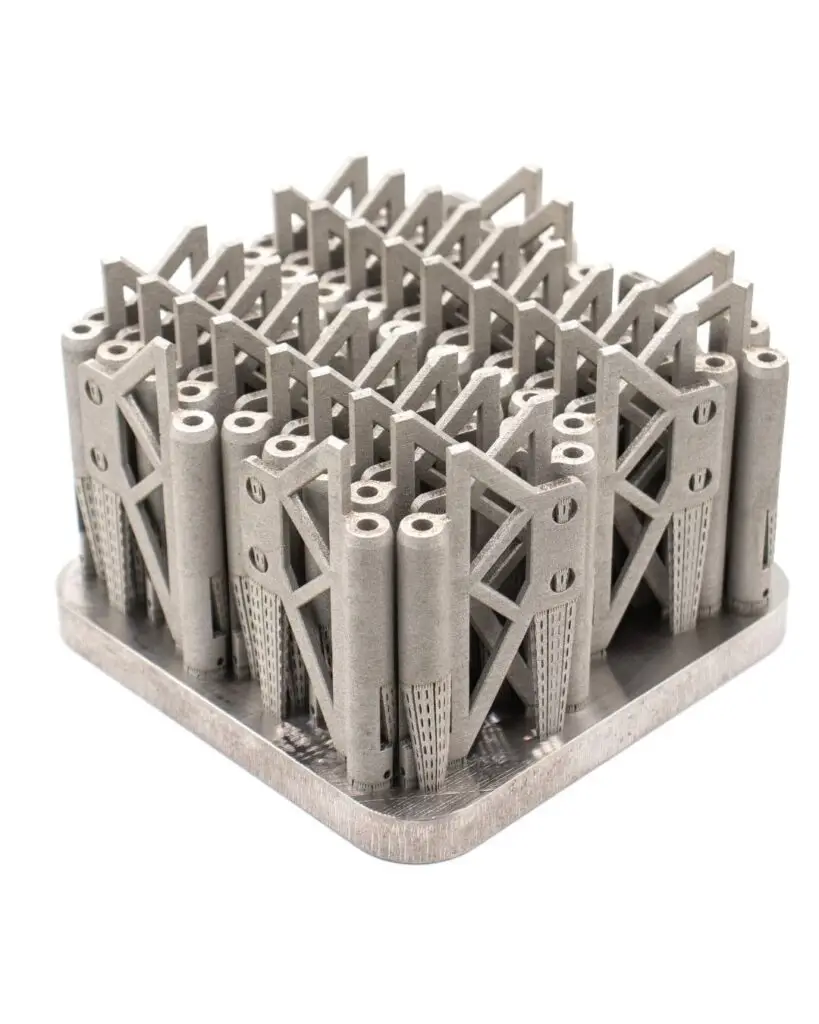
The part, or often an entire assembly, is redesigned for the strengths of LPBF. Multiple components are consolidated into a single printed part, internal geometries are simplified, and supports are minimized. This step determines most of the cost and quality gains realized later in series production.
3. Series Production
Once the design is validated, the part moves into repeated production runs. Build plates are nested for multiple parts per job, and post-processing steps (depowdering, sieving, sometimes heat treatment) are standardized so that every batch follows the same workflow.
Case Study: How INDEX-Werke Scaled Production
INDEX-Werke, a manufacturer of CNC turning machines, applied this process to an assembly used in the bar feeder magazine of its multi-spindle automatic lathes. In conventional production, the assembly required multiple suppliers, several storage locations, and a high number of individual assembly steps, which also increased the reject rate.
By redesigning the assembly for additive manufacturing and consolidating several components into fewer printed parts, INDEX-Werke achieved the following results when moving to metal AM series production:
- 62% reduction in cost
- 66% reduction in storage requirements
- 80% reduction in assembly effort
- 10% reduction in scrap
These results illustrate a broader pattern: the biggest gains in metal AM series production rarely come from the printing step alone. They come from consolidating parts, cutting supply chain complexity, and removing assembly steps that conventional manufacturing requires.
What Makes a Compact System Serial-Production Ready
Not every metal 3D printer is built for repeated production runs. For manufacturers evaluating a move to series, a few system-level features make the difference between an isolated success and a reliable process.
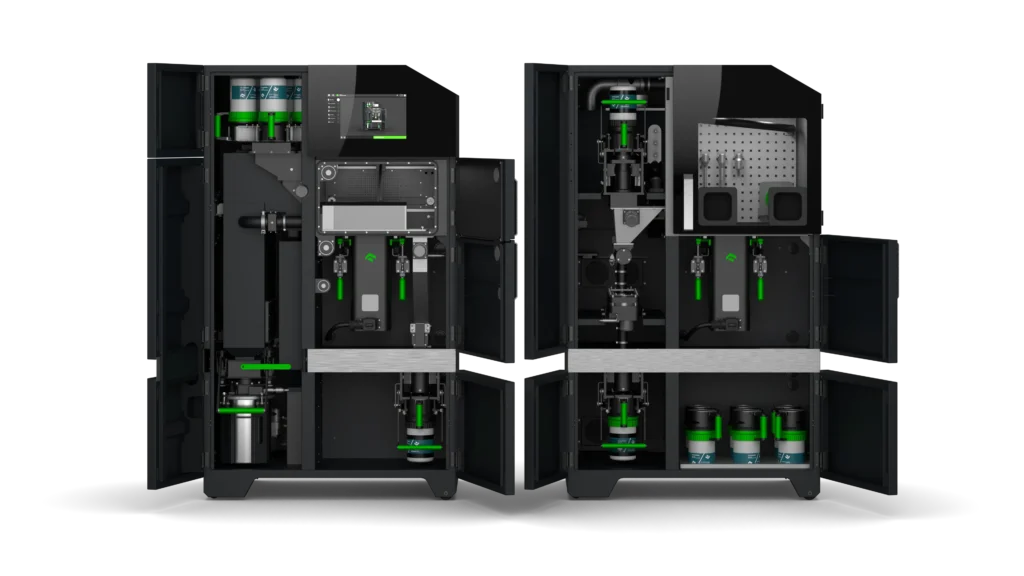
Our MPRINTpro is built for this stage. Its 500W fiber laser and 80 micron focus diameter support higher productivity per build, while the self-cleaning permanent gas filter reduces maintenance downtime and helps keep run-time costs predictable across many consecutive jobs. The interchangeable module system, including the standard, heating, and extended build modules, allows the same machine to be reconfigured for different part geometries without a full system change.
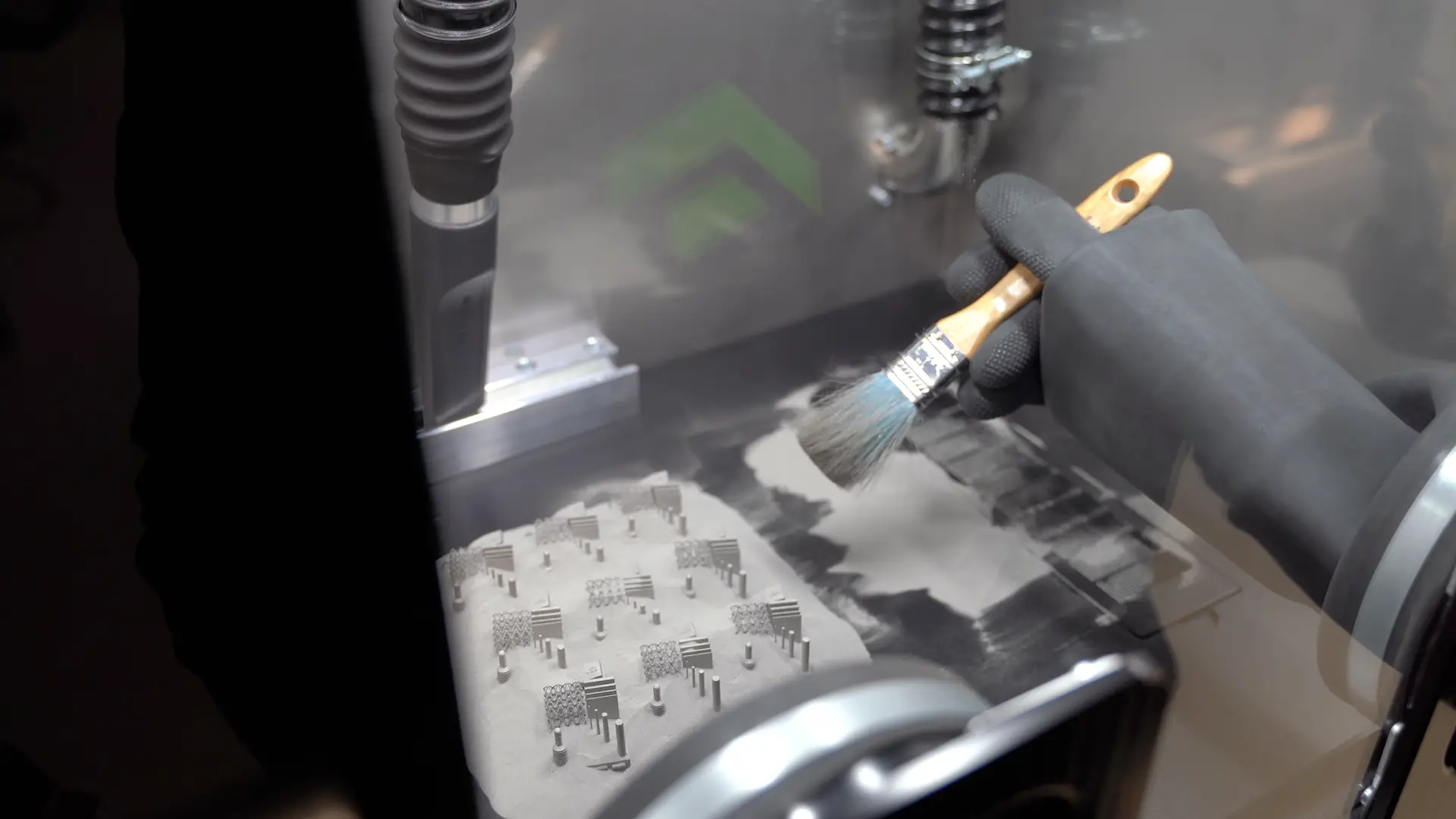
Consistent powder quality matters just as much as the printer itself. Our MPUREpro handles unpacking and ultrasonic inert sieving in one station, returning sieved powder to a supply cartridge for reuse. This closed handling loop is what keeps material properties consistent from the first part in a batch to the last.
Is Your Part a Good Candidate for Serial Metal AM?
Before investing in a redesign, it helps to check a part against a few practical criteria:
- Volume: does the part or assembly get ordered repeatedly, in batches rather than as a one-off?
- Complexity: would consolidating multiple components into one printed part reduce assembly steps or supplier dependencies?
- Material fit: is the part suited to metals commonly used in LPBF, such as 316L, Ti6Al4V, AlSi10Mg, or 1.2709 tool steel?
- Current pain points: are reject rates, lead times, or storage costs already a known problem in conventional manufacturing?
If two or more of these apply, the part is a reasonable candidate for a DfAM evaluation before committing to a full production switch.
Getting Started
Scaling metal 3D printing from a single prototype to a reliable production process is a design and process question as much as a machine question. Companies that treat DfAM as a distinct step, rather than skipping straight from prototype to volume printing, see the clearest results in cost, storage, and assembly effort.
If you are evaluating whether a part in your production is ready for serial metal AM, our team can help assess the fit based on your current process and part geometry.
Explore our MPRINTpro | Explore our MPUREpro | Talk to our team about scaling metal AM