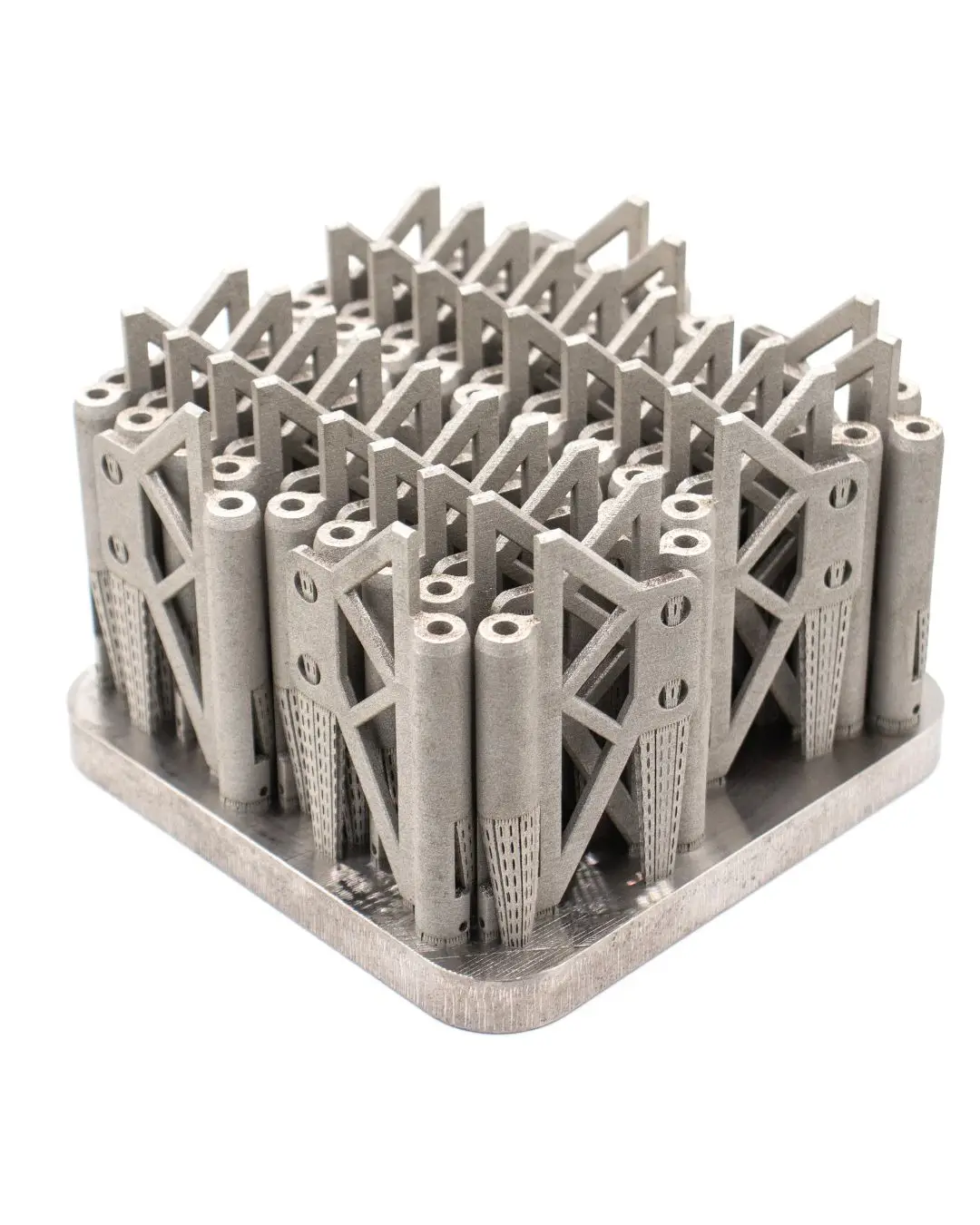
Metal 3D printing builds metal parts directly from digital designs by melting powder layer by layer. It is also called laser powder bed fusion (LPBF), selective laser melting (SLM), or direct metal laser sintering (DMLS). The technology works fundamentally differently from traditional machining. And often, the most valuable applications emerge only after you start working with it.
What Is Metal 3D Printing?
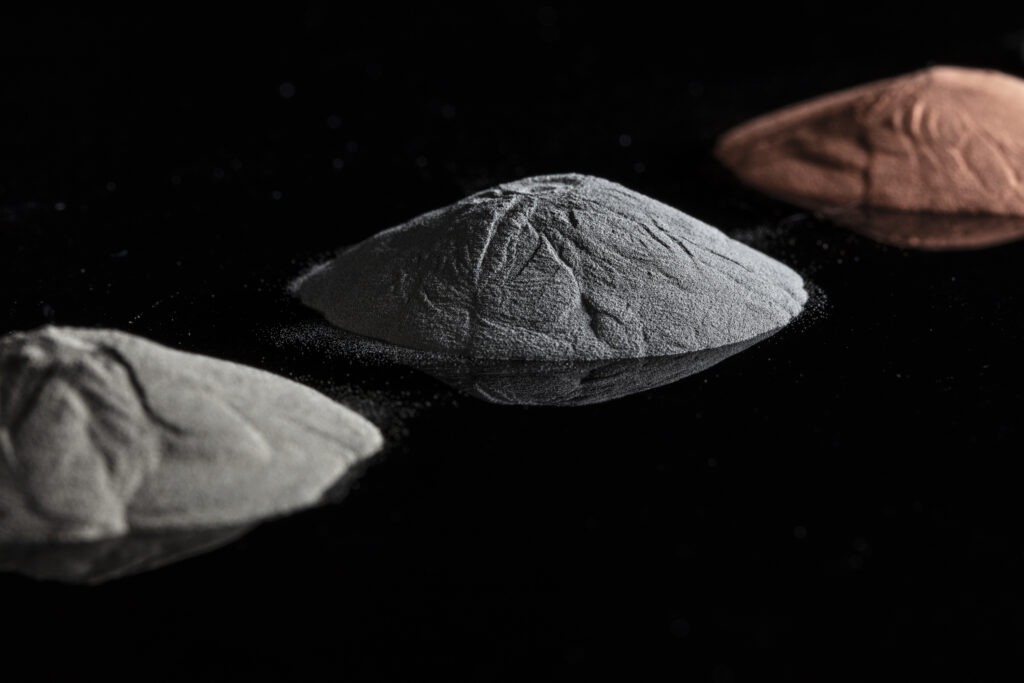
In metal 3D printing, a high-power laser melts metal powder particles into solid layers, which bond together to form a finished part. The process begins with finely powdered metal such as stainless steel, titanium, aluminum, tool steel, or specialized alloys, spread evenly across a build platform. The laser selectively melts the powder in the pattern of the first layer. Each new layer bonds to the previous one, building upward until the part is complete.
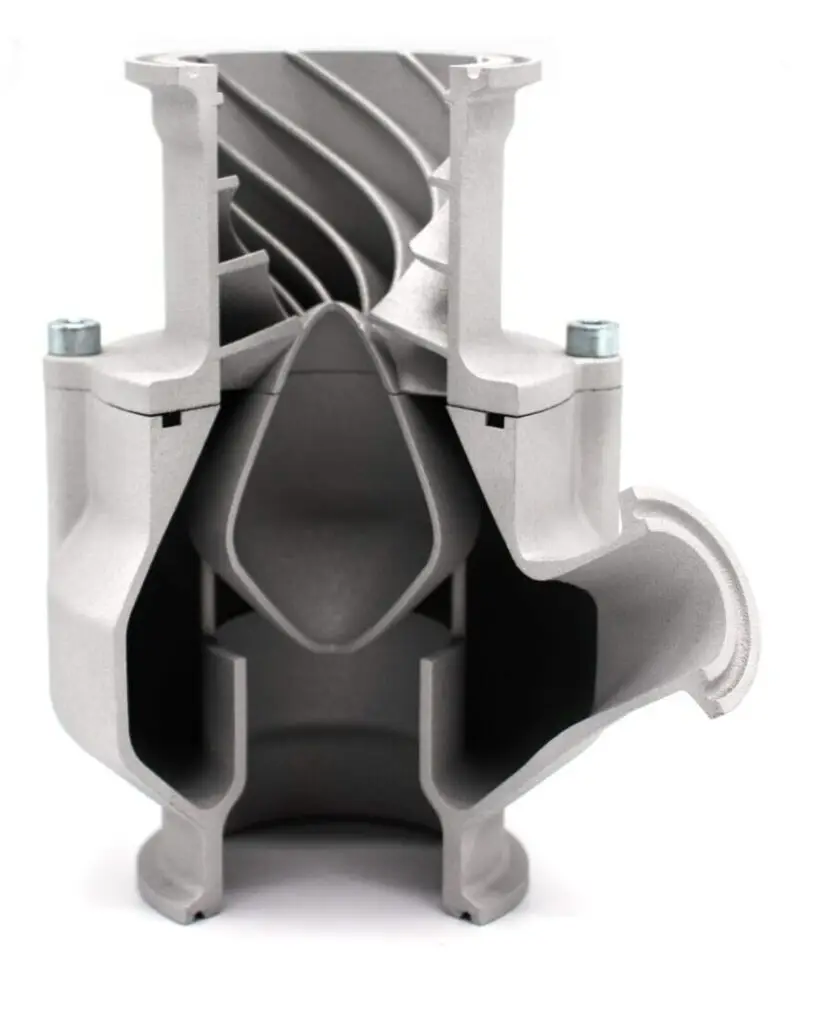
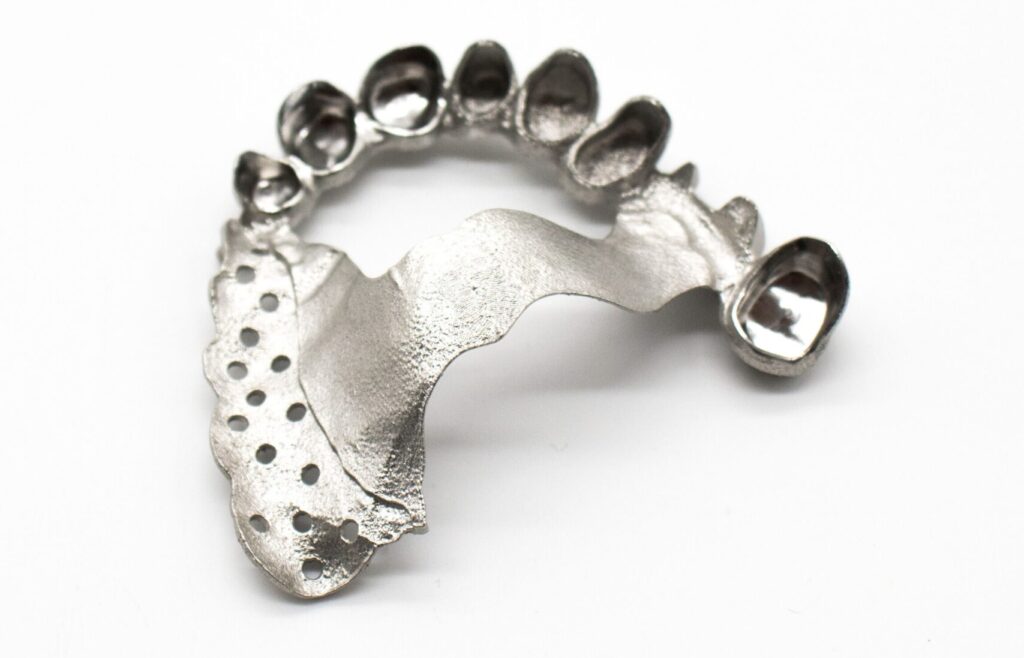
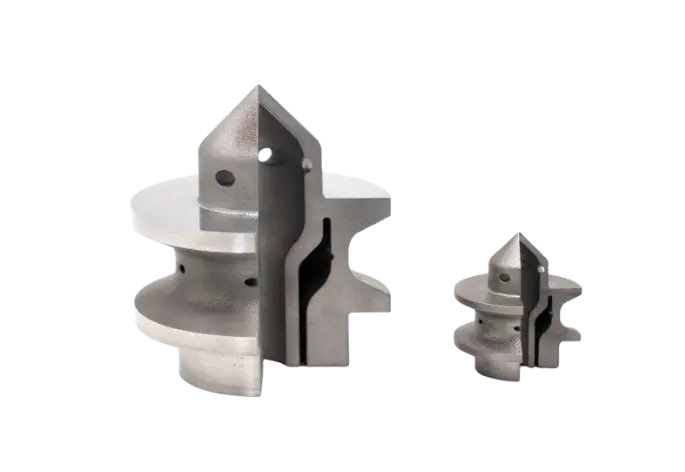
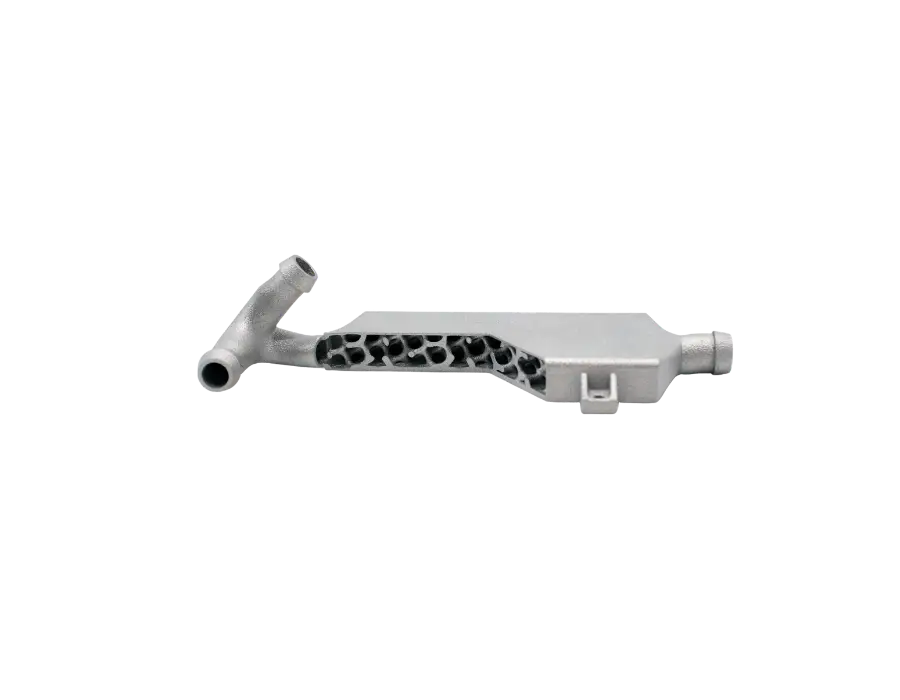
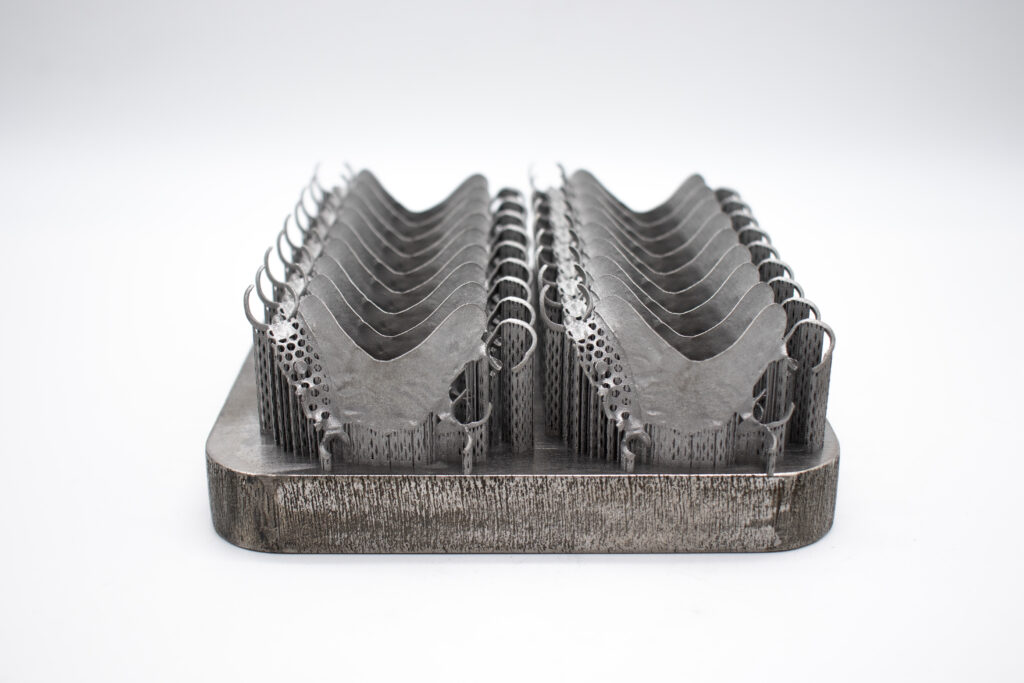
This approach enables geometries that traditional machining cannot create: internal channels, complex cavities, and organic shapes, all from a single design file.
The most common metal 3D printing technology is laser powder bed fusion (LPBF), which dominates industrial adoption. Other approaches also exist, including electron beam melting (EBM), direct energy deposition (DED), and binder jetting. Each has its own trade-offs in speed, precision, and cost.
How Does Metal 3D Printing Work?
The core process repeats in cycles: spread a thin layer of powder, melt it selectively with a laser, lower the build platform, repeat. A high-power laser scans the design’s cross-section, fusing powder particles into a solid line. The platform descends (typically by 20 to 100 micrometers per layer), a blade spreads fresh powder, and the laser scans again. This continues until the part is complete, a process that can take hours to days depending on size and complexity.
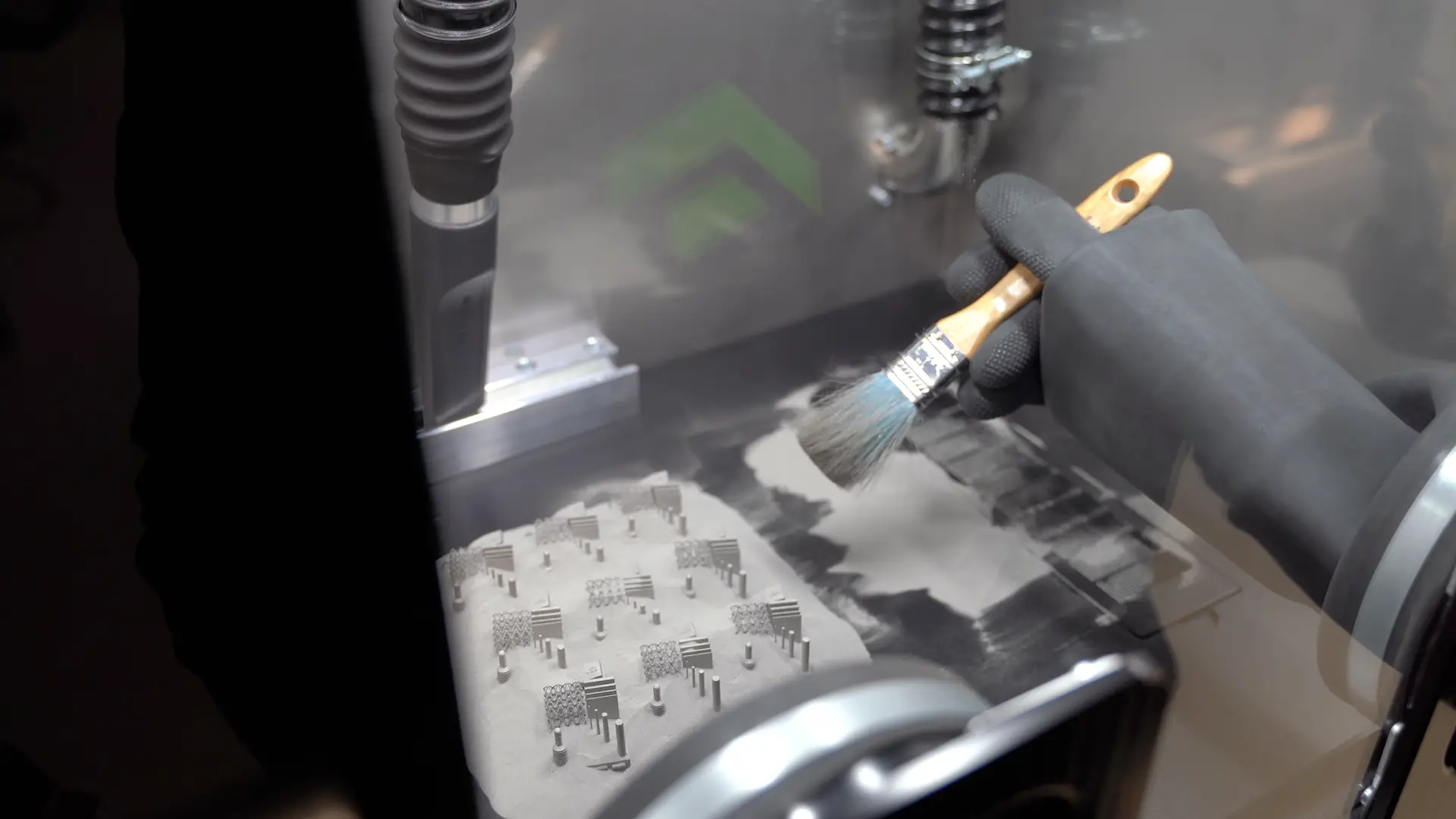
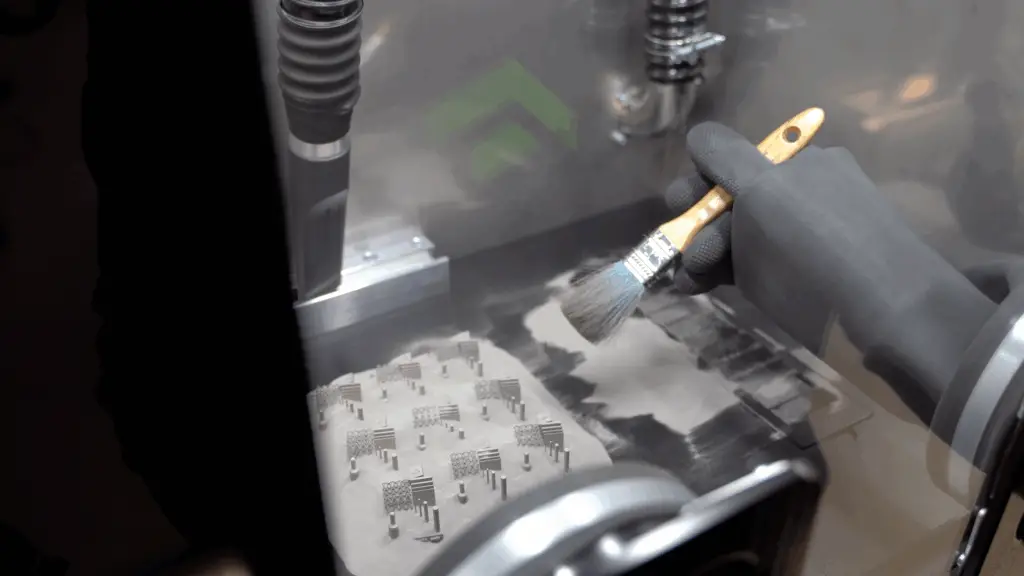
A detail many teams underestimate: after printing, parts sit surrounded by loose powder. Traditional powder bucket systems are heavy, hard to handle, and can lead to operator exposure and errors. This is why OCM designed a cartridge system. Two color-coded cartridges (supply and overflow) are ergonomic to handle, equipped with NFC tracking to prevent powder mix-ups, and engineered to minimize direct contact with the powder. The result: operators focus on printing, not on managing hazardous material.
What Are the Key Advantages of Metal 3D Printing?
Metal 3D printing excels where traditional manufacturing struggles. You can create complex internal geometries, consolidate multi-part assemblies into single pieces, and iterate on production-grade materials quickly. Where conventional methods need separate tools, fixtures, and assembly steps for intricate shapes, 3D printing produces these as one part. This reduces part count, assembly labor, and waste.
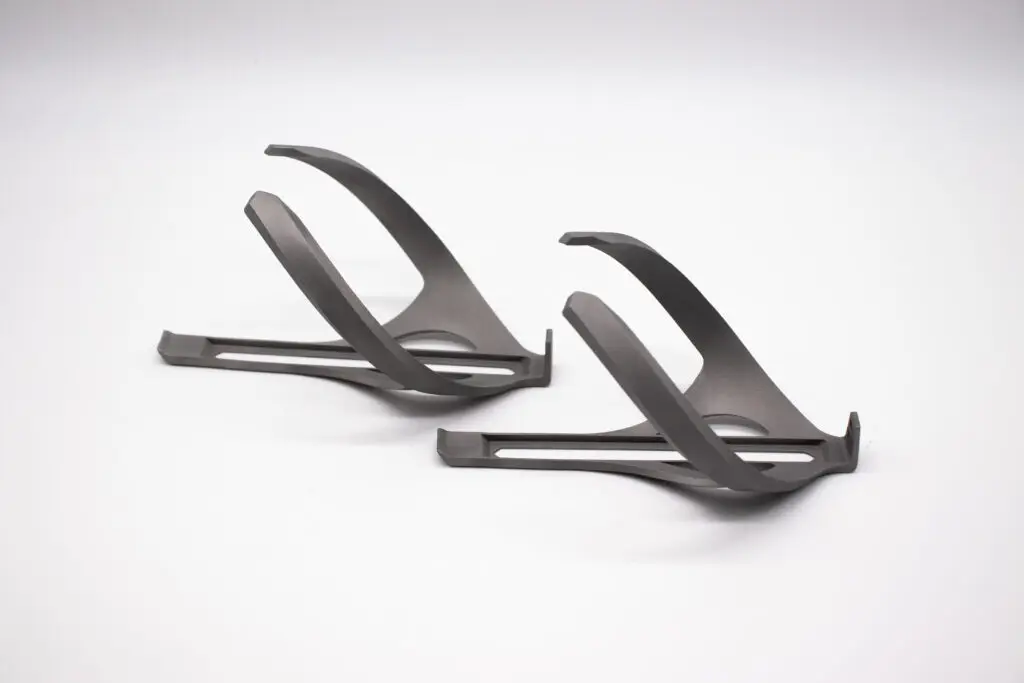
The technology also enables design optimization that was impossible before. Hollow structures, lattice infills, and topology-optimized geometries maintain strength while cutting weight. This is especially valuable in aerospace, medical, and automotive applications where mass matters.
Can You 3D Print Metal?
Yes. The material range is broad: stainless steel (316L, 17-4PH), tool steel (M300, CxPlus), titanium (Ti6Al4V), aluminum (AlSi10Mg, A6061), nickel-based superalloys (Inconel 718), or cobalt-chrome for biocompatible applications. Each has distinct mechanical properties, thermal behavior, and processing requirements.
How Does Metal 3D Printing Compare to Traditional Manufacturing?
Traditional subtractive manufacturing (CNC machining, turning) removes material to create a shape. This is efficient for simple geometries, but wasteful for complex ones. Metal 3D printing adds material only where needed, reducing scrap and enabling designs that are impossible to machine. The trade-off: 3D printing is slower per part for simple shapes, but faster and more cost-effective for complex, lower-volume parts.
For intricate designs and rapid iteration, metal 3D printing offers clear advantages. For production decisions, the economics depend on part complexity, batch size, and optimization opportunities.
What Are Common Applications of Metal 3D Printing?
The technology serves medical, automotive, defense, aerospace, dental, tooling, and general manufacturing. It fits any industry where parts are complex, specialized, or low-volume. The common pattern: parts where traditional tooling costs more than the parts themselves, or where geometry constraints make conventional manufacturing impossible.
Post-Processing: What Happens After Printing?
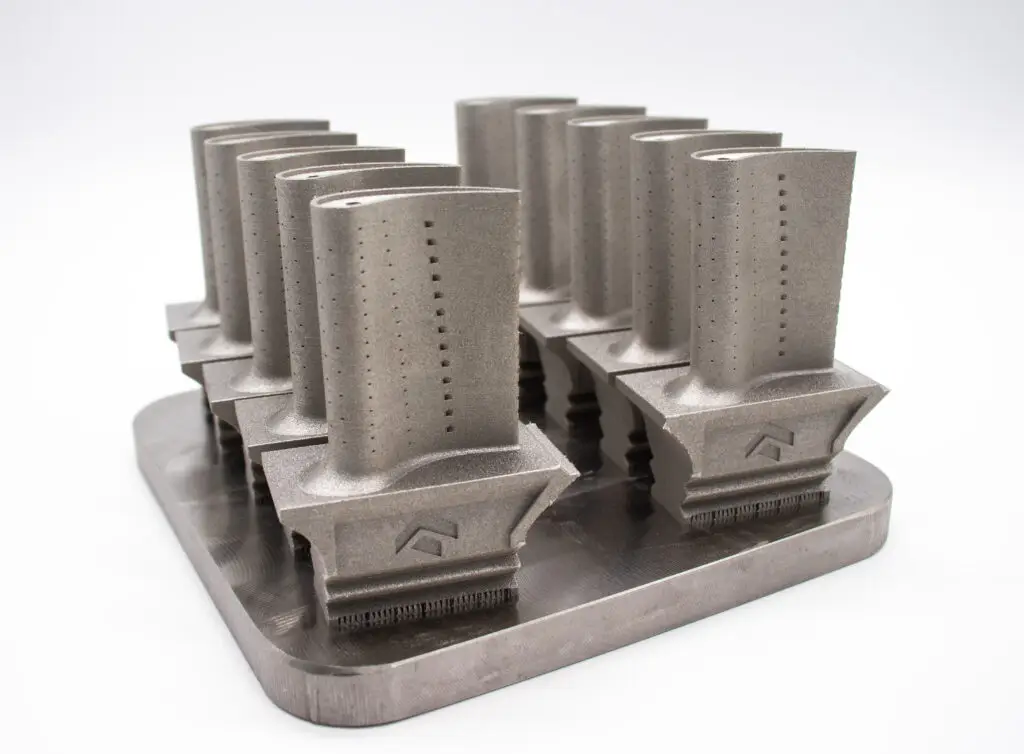
After printing, parts require several post-processing steps. Loose powder must be removed via unpacking and sieving. Support structures, the metal scaffolding that controlled warping during the build, must be cut or machined away. Many parts undergo heat treatment to relieve residual stress and optimize mechanical properties. Surface finishing (grinding, polishing, plating) may follow to meet tolerance or aesthetic requirements.
What Does Metal 3D Printing Cost?
The cost structure includes machine investment, material cost (metal powder is expensive), operator time, and facility infrastructure (powder handling, heat treatment, finishing). Operator time covers job preparation in the software, machine setup, and post-processing. This is where ease of use has a direct effect: the simpler the system is to operate, the less specialized labor each job requires. Per-part cost varies dramatically by design complexity and batch size.
For SMEs, the economics favor lower-volume, higher-complexity parts over high-volume commodity parts. Whether the technology makes sense depends on your application, production volume, and the cost of alternatives like CNC machining or outsourcing. One Click Metal lists its system prices directly in the online store, so you can compare configurations without a sales call.
Is Metal 3D Printing Accessible for Small Manufacturing Teams?
Accessibility depends on two factors: how complex the technology is to use, and what infrastructure it demands. Historically, metal 3D printing required specialized expertise, dedicated technicians, and complex powder-handling systems. This limited adoption to large manufacturers and service bureaus.
Modern systems prioritize ease-of-use. Intuitive software, simplified powder handling, and streamlined workflows make metal 3D printing viable for SMEs without deep AM expertise. The learning curve remains real, but systems are designed so manufacturing engineers, not just AM specialists, can operate them confidently after proper training.
How Do I Get Started with Metal 3D Printing?
Start with a clear application: a part you currently struggle to manufacture, a prototype you need to iterate quickly, or an assembly you want to consolidate. Evaluate your options (buy vs. outsource), then engage a technology partner who can guide process design, material selection, and post-processing workflow.
The decision to invest in metal 3D printing should center on whether the technology solves a real production problem and whether your team can sustain operation long-term. Many successful implementations start with a pilot project (one application, real production, lessons learned) rather than a broad “we will 3D print everything” approach.
If you are exploring metal 3D printing for your team, start by defining your use case. Once you understand the technology and start working with parts, you will likely discover opportunities you did not anticipate at the start. That is when metal 3D printing moves from a solution to an asset.
Metal 3D printing builds functional, production-grade parts from metal powder. Plastic 3D printing typically produces prototypes or finished plastic goods. Metal 3D printing requires much higher power (lasers, heated chambers, specialized powder handling) and produces parts suitable for load-bearing structural and thermal applications.
Build time depends on part size, complexity, and laser power. Simple parts print relatively quickly, while large or complex parts take significantly longer. Post-processing time (unpacking, support removal, heat treatment, finishing) often exceeds print time.
Metal 3D printing works for both. It suits lower-volume runs where design complexity or material performance justify the per-part cost. Very high-volume production typically favors traditional manufacturing unless parts are highly specialized.
Modern metal 3D printing systems are designed for manufacturing engineers without prior AM experience. However, operators must understand basic principles of powder handling, material properties, and post-processing.